The Watch Site banner

1 - 19 of 19 Posts

·
Registered
Joined
·
1,199 Posts
Discussion Starter #1
I am interseted in how these 70`s quartz watches performs today.
So now I have changed batteries and set them to same time.
Chosed these because i like them and they represent different calibers and year.
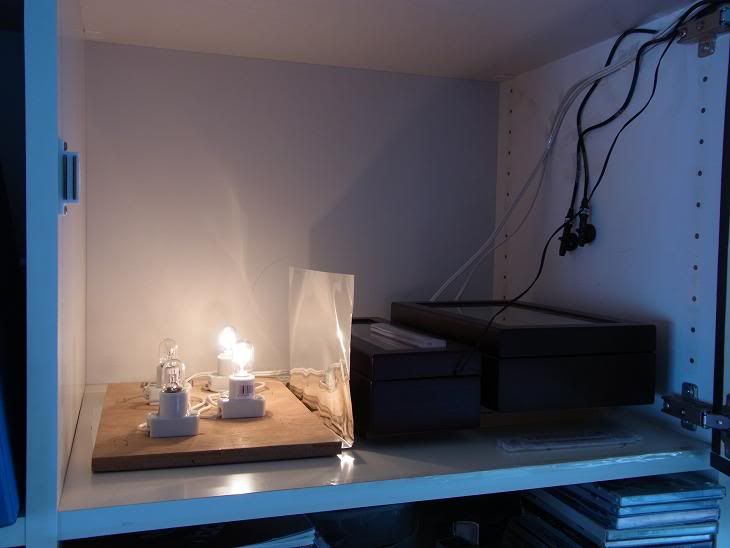
So from now they go in the cabinet which I intend to keep in stable temperasture.
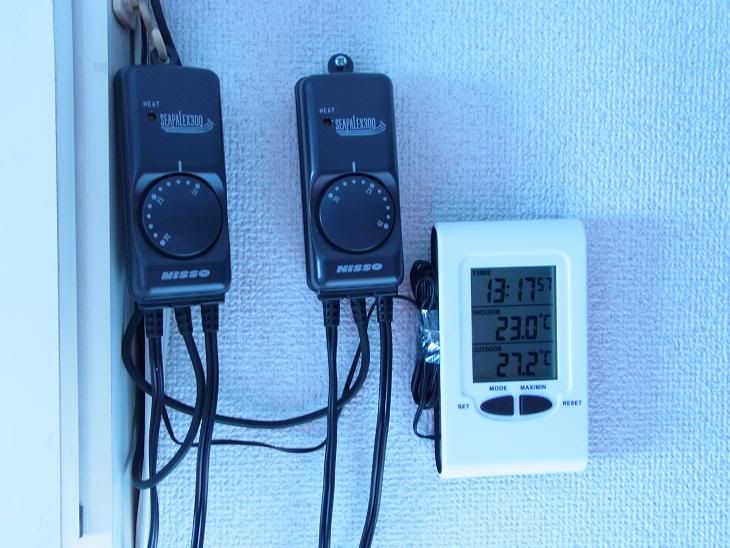
To simulate wear I will keep them at 27 C during day and the 8 hours at night at 22 C.

Hers is the watches, first an box with 10.
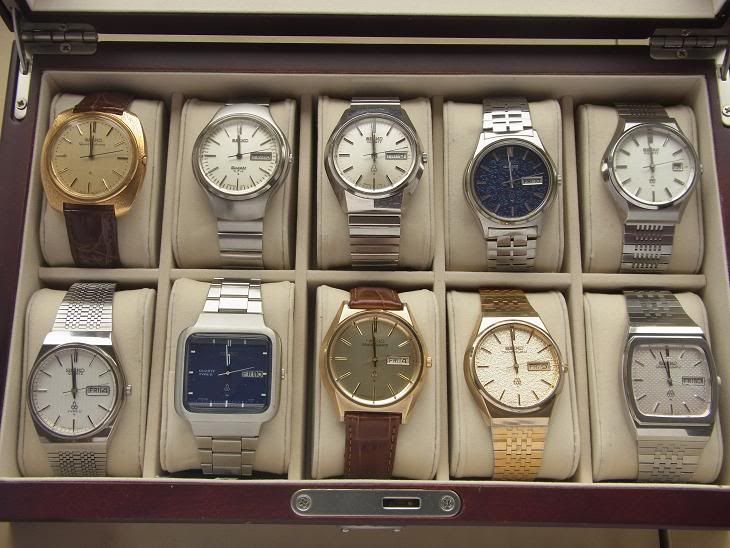

And an box for 5 watches.
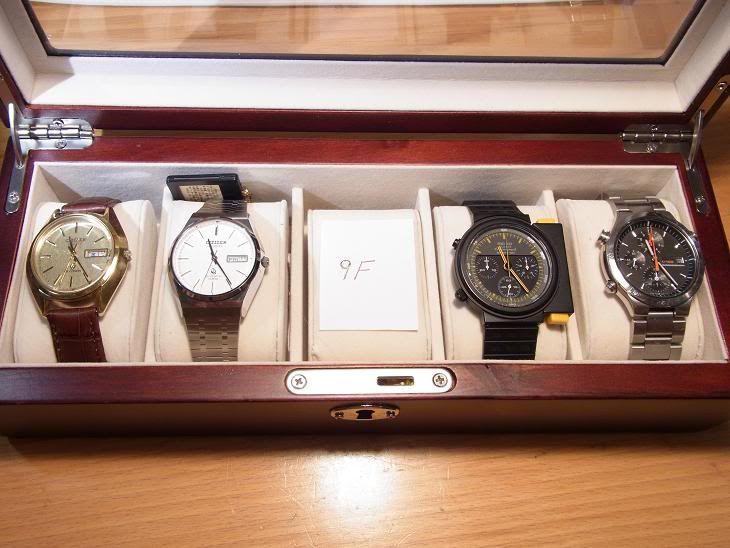

And here is the watches one by one.

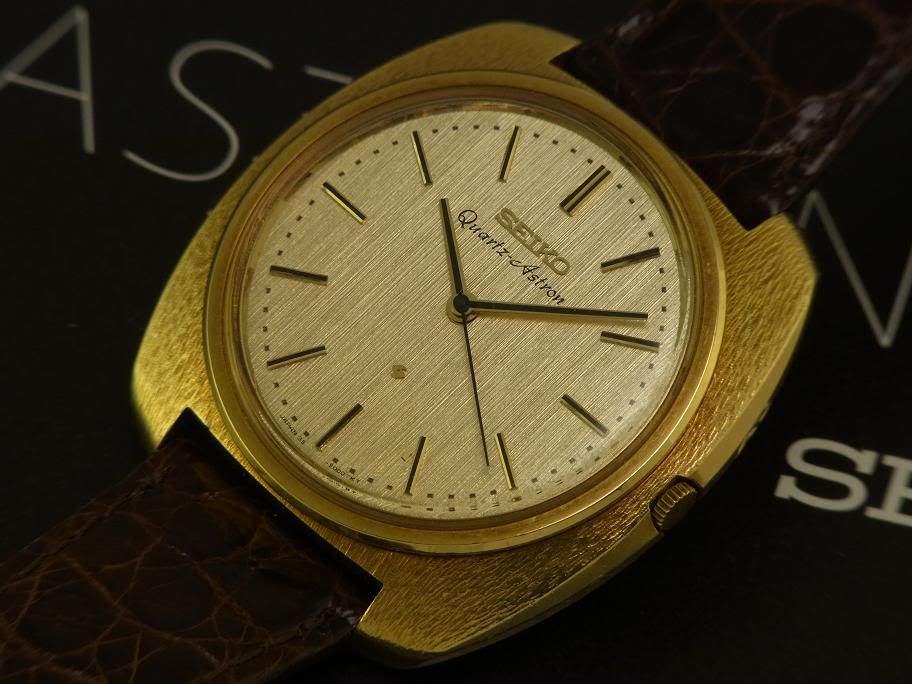
#1
Seiko Quartz Astron , 35-9000 from 1970 , rated to 5 +-s/month
First Quartz wrist watch sold to public.


#2
Seiko Quartz V.F.A. , 3823-7000 from 1971 , rated to +-s/month
Very Fine Adjusted.
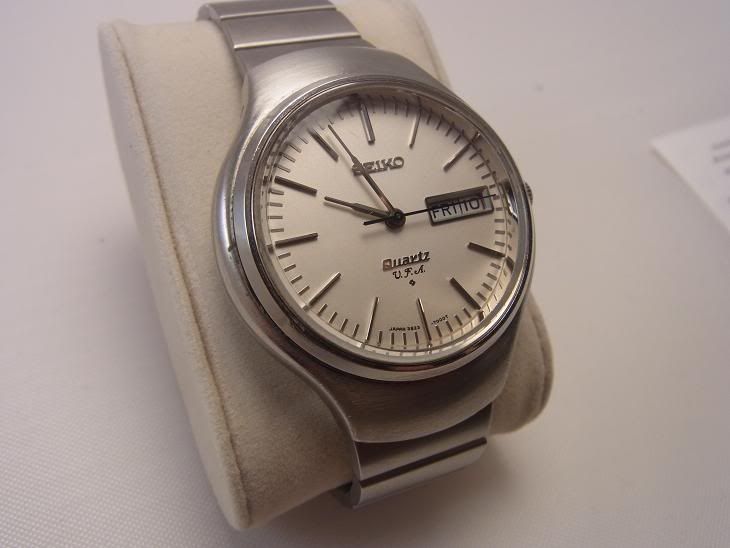

#3
Seiko Quartz (QT) , 3803-7020 from 1972 , rated to +-15s/month


#4
Seiko Quartz QT, 0823-7000 from 1974 , rated to +-15s/month
Blue dial that really shines.
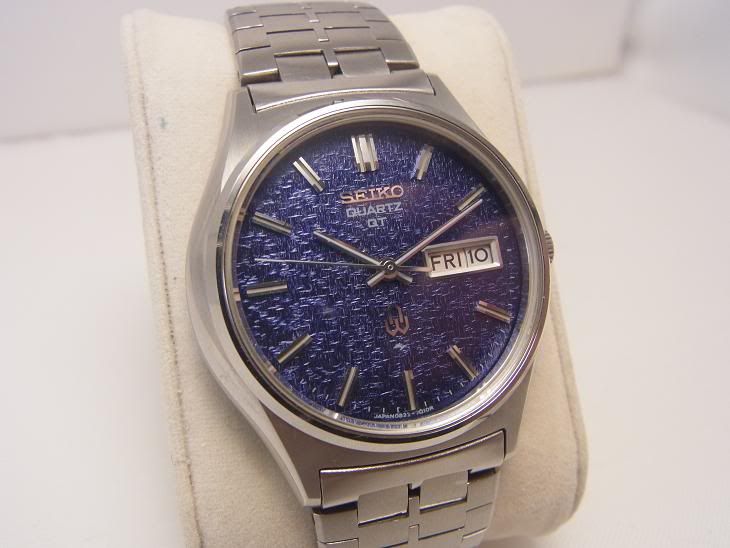

#5
Seiko Quartz , 0842-8000 from 1975 , rated to +-15 s/month
My photo does not show but this dial has snowlike shine to it, really nice.
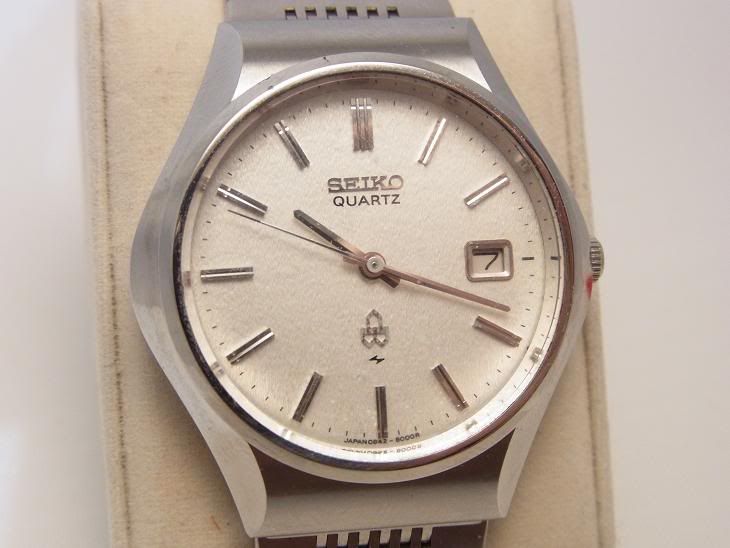

#6
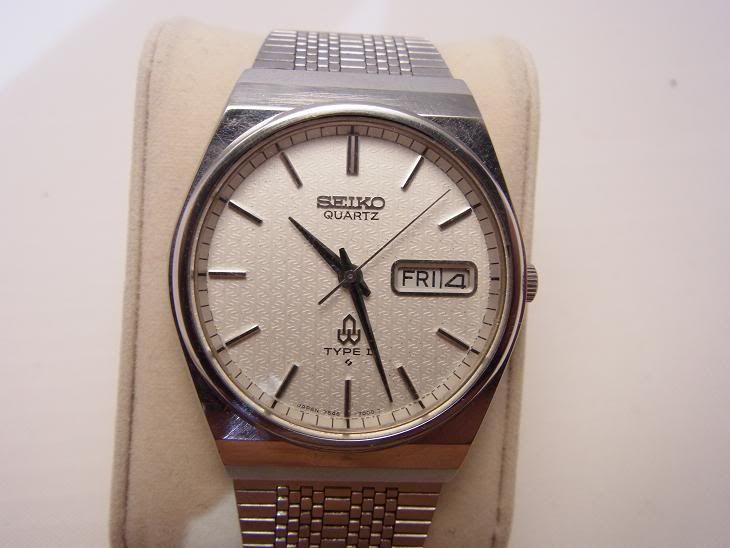
Seiko Quartz Type II , 7546-7000 from 1977 , rated to +-15 s/month.
The second generation quartz watches, affordable with prices around 20 000 yen.
This watch is the one that sparked my intrest for the 70`s quartzes.
Wonderful textured dial and classy case.

#7
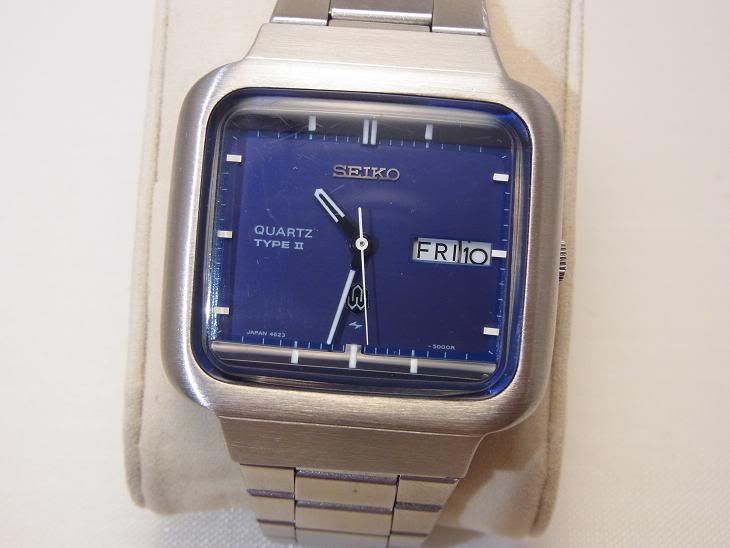
Seiko Quartz Type II , 4623-5000 from 1976 , rated +-15 s/month
From Daini and not so common.

#8
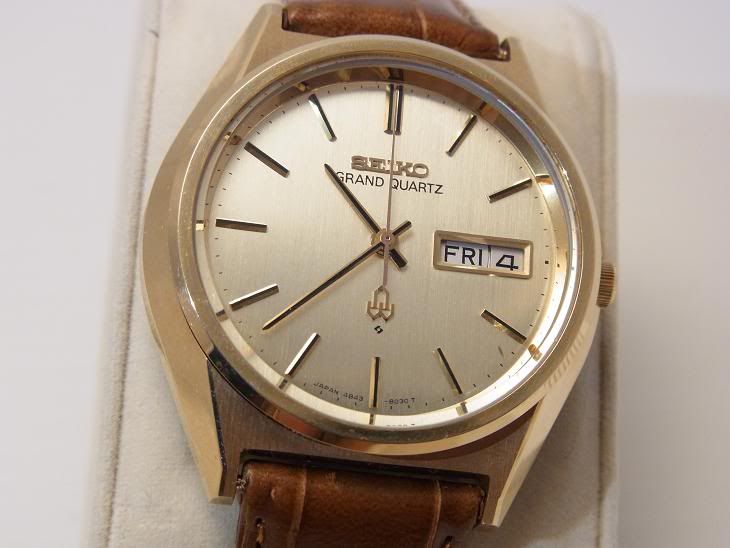
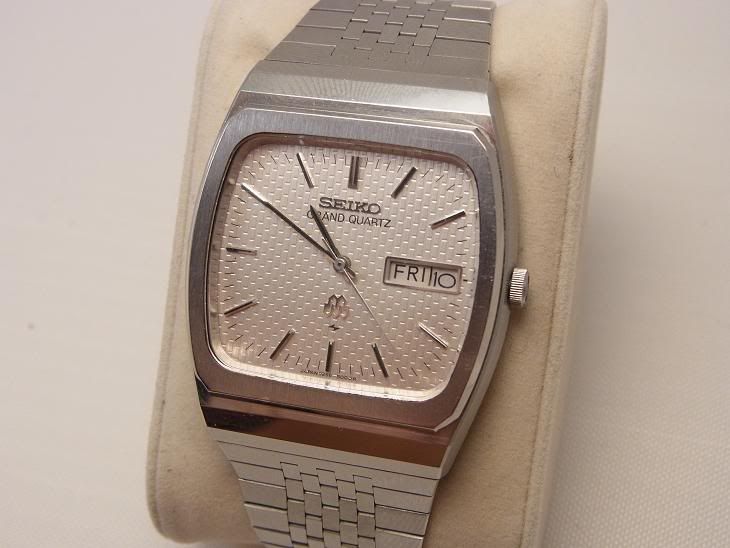
Seiko Grand Quartz , 4843-8041 from 1976 , rated to +-5 s/month
Nice watch if you like gold, I do.

#9
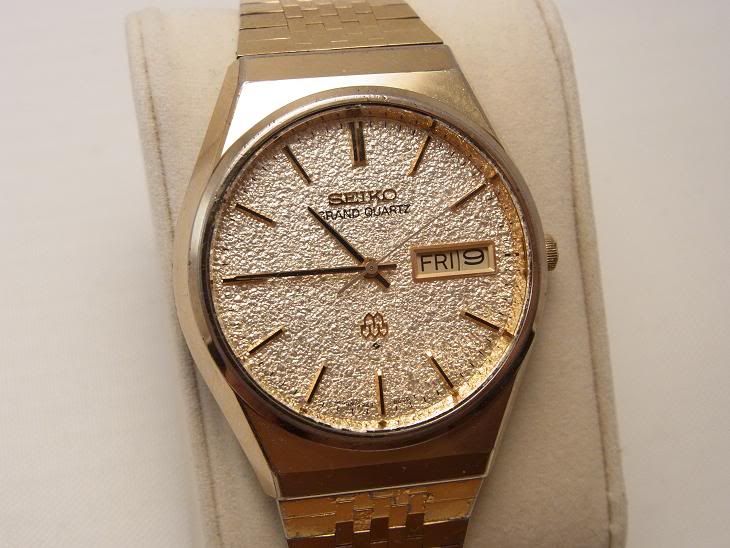
Seiko Grand Quartz , 9943-8020 from 1978 , rated +-10 s/year
Twin quartz movment. Watch is quite used but the dial is just sparkling.

#10
Seiko Grand Quartz , 9256-5010 from 1978 , rated +-10 s/year.
Also an twin quartz, this from Daini.

#11
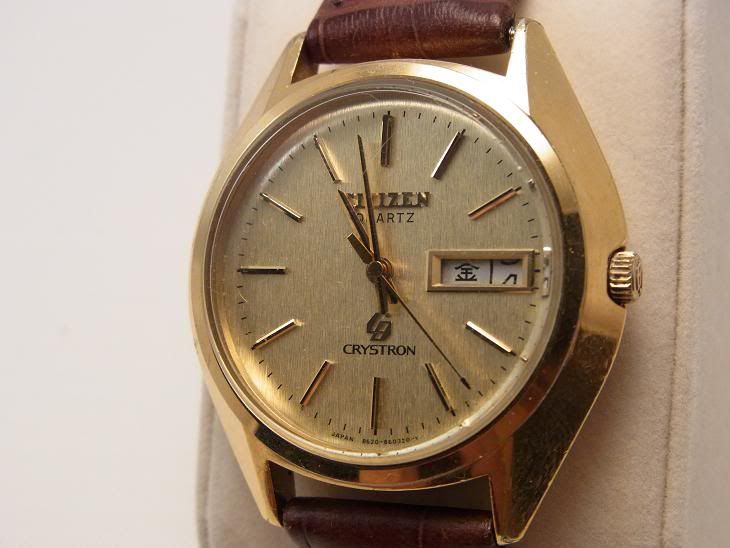
Citizen Quartz Crystron , Caliber 8620 A from 1973 , rated +-5 s/month
First year of Crystrons.

#12
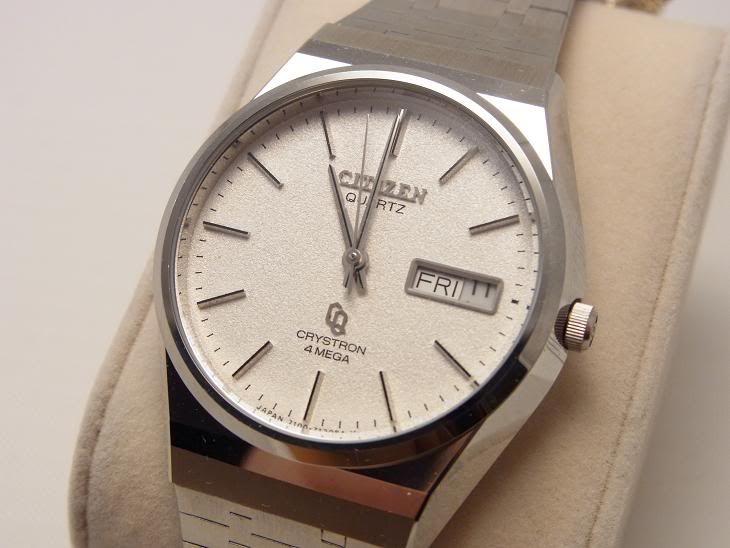
Citizen Quartz Crystron 4 Mega , cal. 7370-07 D from 1979 , rated +-5 s/year
4,194,304 Hz

#13
Seiko 9F Rated to +-10 s/year.
Not in yet but will soon be added as an comparison from today.
If anyone has an SMR 40 000 please tell me.

#14
Seiko Quartz Chronograph sports 100 , 7A28 from 1983, rated to +-15 s/month
Not an watch from the 70`s but this caliber is one of the most famous from the 80`s


#15
Seiko 1/100 Chronograph, 7T52-6A30 from 1992 , rated to 15 s/month
An watch from the 90`s and I just love the technology show off.
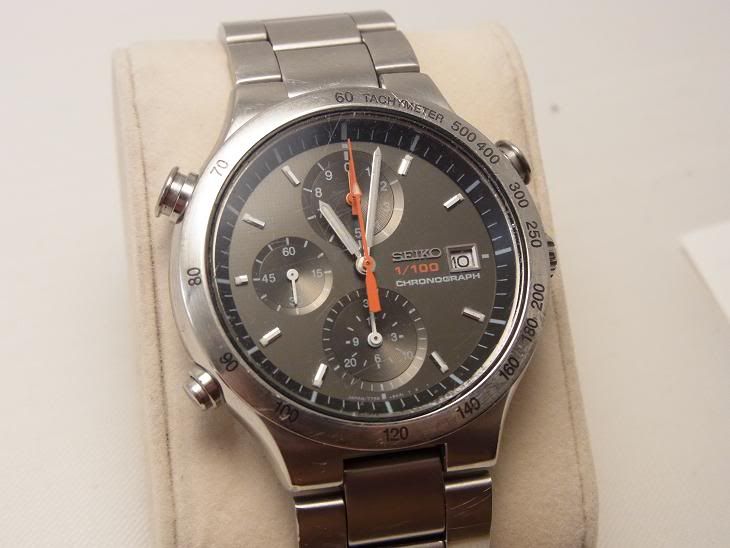

So how about an small competition to guess the outcome.
Let's guess which watch will have the smallest deviation after 10 month, and which will be second,
third,fourth and fifth?
Maybe also how many seconds off the #1 will be?
I will offer an small price to the winner if more than one participate.

/Bjorn
 

·
Registered
Joined
·
9,869 Posts
Bjorn, your collection makes me feel
What a fantastic line up of vintage quartz SEIKO!
:bravo_2: :bravo_2:
 

·
Registered
Joined
·
242 Posts
I'll guess.

1 - #12 Citizen Quartz Crystron 4 Mega @ -3 seconds
2 - #9 Seiko Grand Quartz @ +6 seconds
3 - #10 Seiko Grand Quartz @ +11 seconds
4 - #1 Seiko Quartz Astron @ -63 seconds
5 - #15 Seiko 1/100 Chronograph @ +72 seconds

andy b.
 

·
Registered
Joined
·
1,199 Posts
Discussion Starter #4
Thanks you JohnN for kind words.

Good guess Andy.
But I think we should only guess the deviation, it will be to difficult guess minus or plus.
So I ignore your + and -, is that OK with you?

/Bjorn
 

·
Registered
Joined
·
386 Posts
kuma-kun said:
I am interseted in how these 70`s quartz watches performs today.
So now I have changed batteries and set them to same time.
Chosed these because i like them and they represent different calibers and year.
So from now they go in the cabinet which I intend to keep in stable temperasture.
To simulate wear I will keep them at 27 C during day and the 8 hours at night at 22 C.
...
Very interesting test - I am myself very interested in quartz performance and my own 2011 tests are partially 'dedicated' to 'quartz aging' (after having the 2010 tests focused on general accuracy and thermal stability) - I just can't wait to hear about your results!

I suggest the video method from

http://forums.watchuseek.com/f9/methods-determining-accuracy-watch-382752.html

- I believe you should get usable results in a month, and with that you can also test a little the differences in thermal stability!

But 'predicting' the results will be a complete lottery - since it all dramatically depends on the service and regulation history - I hope all those still have some cleaning and oiling done in the last 10 years :)

And of course that the modern 9F will most likely win :)

From the older models in theory the adjustment should be simpler on the 4 MHz Crystron - so that should rank pretty well.

My own twin-quartz experience is showing that models with two trimmers can still be adjusted (with extreme patience) to under 10-20 second/year - but very few people probably know how to do that :(
 

·
Registered
Joined
·
242 Posts
kuma-kun said:
Good guess Andy.
But I think we should only guess the deviation, it will be to difficult guess minus or plus.
So I ignore your + and -, is that OK with you?

/Bjorn
Bjorn,

Sure, that's fine by me. I just wanted to play along to see if anyone even guesses close.

andy b.
 

·
Registered
Joined
·
1,199 Posts
Discussion Starter #7
Catalin, your suggestion using the video method is good, I do believe this method will be quite accurate.
But on other hand I like to see what happens month after month also, so for now I stick to this simple
10 month test.
Maybe 2012 I can do an more in depth test with different temperatures.
My plan is to buy myself an Quartz tester, then I can probably check temperature stability more quickly.
That will be interesting.
Do you have any experience how much temperature change the accuracy in real world?

/Bjorn
 

·
Registered
Joined
·
386 Posts
kuma-kun said:
...
Do you have any experience how much temperature change the accuracy in real world?
...
Well, if the measurement is accurate enough the change WILL be visible :)

My watches clearly show a (small, for HEQ, slightly bigger for non-HEQ) rate difference from summer to winter, and even a more interesting testimony to this is for instance a page like the one below - note the rate around winters vs. summers:

http://www.mechanikus.hu/sta_O1510.htm

And the difference is actually larger when you have major changes in the wearing pattern - for instance a month of just 'room temperature' vs. a month of 'continuous wrist temperature'.
 

·
Registered
Joined
·
1,199 Posts
Discussion Starter #9
Catalin, thank you for your input.
How much diffrence do you estimate an HEQ and non-HEQ change from 20 C to 30 C?
How abot the crystal ageing?
Do you know if they normally age slowly or sometimes suddenly, if they crack or something?

Anyway, this simple test is not like an scientific test, it is just for fun.
To keep them all at temparture as used, on wrist at daytime and off wrist at nighttime.
Hopefully I can learn little from it.
All these watches I do not know the history of, but I know they perform decent.
Somtimes an cheap watch can have amazing performance just of pure luck.

/Bjorn
 

·
Registered
Joined
·
386 Posts
kuma-kun said:
Catalin, thank you for your input.
How much diffrence do you estimate an HEQ and non-HEQ change from 20 C to 30 C?
How abot the crystal ageing?
Do you know if they normally age slowly or sometimes suddenly, if they crack or something?

Anyway, this simple test is not like an scientific test, it is just for fun.
...
It is certainly a nice, funny and very interesting test!

From 20 to 30 C - my estimate is that for non-HEQ it can be anywhere from like 12 seconds/year to 120 s/y - it is largely a matter of luck in how the parabolic dependency on temperature from the quartz was 'centered' (in the manufacturing process) around the 'room temperature'. On HEQ - it should be under 36 s/y - but aging can play a huge role! (my 9923 twinquartz started around 60 s/y difference, but it could be adjusted and I am now around 10 s/y difference).

'Aging' in quartz watches is a very interesting subject - it is vastly more obvious for high frequencies and it is said that for 32 kHz 'normal' quartz it should be mostly stabilized after a few years - however that is not necessarily true on HEQ models, where specifically the TC part could see (slow and small) variations from other components. Generally it is supposed to not be 'fatal aging' (as in cracks or similar), but instead just very small gradual changes of certain properties (the first 1-2 years is said to be dominated by the elimination of ultra-small amounts of impurities that are adsorbed around the surfaces of the quartz and the electric contacts deposited on it).
 

·
Registered
Joined
·
1,199 Posts
Discussion Starter #11
Interesting, now I need to start up one more cabinet to test some other watches under diffrent temperatures
as you suggested using the video method.
But maybe if I can catch an tester it will be enough.

Do you know where I can find more to read about this subject?
I also wonder if Seiko published any papers during their development or did they keep things inside company?
I suppose they did a lot of research inhouse but probably also together with independent reserchers.
During my time working for Seiko I was in another division and have unfortunately no connections in the watch
division.

/Bjorn.
 

·
Registered
Joined
·
386 Posts
kuma-kun said:
Interesting, now I need to start up one more cabinet to test some other watches under diffrent temperatures
as you suggested using the video method.
But maybe if I can catch an tester it will be enough.

Do you know where I can find more to read about this subject?
I also wonder if Seiko published any papers during their development or did they keep things inside company?
...
A really good timer would 'accelerate' certain estimates but there are not many timers that really work with certain modern thermo-compensation methods (like Seiko 9F), and even for the twin-quartz models certain measurements are said to be very tricky - while the video method over a number of weeks would provide a more 'averaged to real conditions' result.

I don't believe manufacturers are very eager to publish a lot of their 'secrets' - but some of the very old stuff was at some point published in certain service manuals - for twin-quartz you can take a look at this post (which also contains a link to the service manual):

http://forums.watchuseek.com/f9/re-calibrating-re-adjusting-caliber-9923-twin-quartz-406406.html !
 

·
Registered
Joined
·
34 Posts
I bet for the 7a28. Mine is in 20 seconds pro year (It could be better, but I doesn't adjust the mechanical switch in it)
 

·
Registered
Joined
·
1,199 Posts
Discussion Starter #17
As Rod kindly pointed out it is time to summarize this.
Unfortunately this test did not work out as I planned.
I set all watches correct time and put them in my cabinet in my bookshelf.
This is heated by normal light bulbs and controlled by controllers for aquariums.
They kept the temperature quite stable as I intended.


Then the disaster struck on March 11[sup]th[/sup] with the big earthquake and the following
Tsunami.
I big tragedy for people in these coastal areas who lost so much.
Here in Tokyo area we where lucky not to be affected so much except that the tsunami
Took out a few powerplants that supplied our area.
So in the summer all here had to try to consume as little energy as possible and I stopped this in June.

But still I kept the watches in same cabinet most of the time.
So the results is from watches kept as worn the first month and then in summer too hot.
Later in Autumn in normal room temperature and then in winter a little bit cold, slightly under 20 degrees C.

Results after 11 month.

#1
Seiko Quartz Astron , 35-9000 from 1970 , rated to 5 +-s/month
First Quartz wrist watch sold to public.


Unfortunately this did only run 9 monthe because I failed to change the battery before the start.
It require an old type of battery with nipple which I did not have so I was hoping it had enough juice.
In 9 month it had gained 8 seconds which I think is completely mindblowing, of course this is just luck but still
interesting.
In my observations this one gain 1-2 s/month in temperature over 30 degrees C and loose about the same amount in temperatures under 20 deg #2
On wrist it clearly is an HAQ.


#2
Seiko Quartz V.F.A. , 3823-7000 from 1971 , rated to +-s/month
Very Fine Adjusted.


This used up an new battery in about an half year so no results here.


#3
Seiko Quartz (QT) , 3803-7020 from 1972 , rated to +-15s/month


Lost 1 minute and 25 s in 11 month, clearly still good.


#4
Seiko Quartz QT, 0823-7000 from 1974 , rated to +-15s/month
Blue dial that really shines.


Gained 2 minutes and 2 s.
That is 11 seconds an month, also inside specification.

#5
Seiko Quartz , 0842-8000 from 1975 , rated to +-15 s/month
My photo does not show but this dial has snow like shine to it, really nice.


+ 14 s in 11 months is surprisingly good.


#6
Seiko Quartz Type II , 7546-7000 from 1977 , rated to +-15 s/month.
The second generation quartz watches, affordable with prices around 20 000 yen.
This watch is the one that sparked my intrest for the 70`s quartzes.
Wonderful textured dial and classy case.


Gained 18 seconds during this time.


#7
Seiko Quartz Type II , 4623-5000 from 1976 , rated +-15 s/month
From Daini and not so common.


+1 minute and 2 seconds is 5.6 s/month


#8
Seiko Grand Quartz , 4843-8041 from 1976 , rated to +-5 s/month
Nice watch if you like gold, I do.


During this tests it averaged 1.2 s/month, total 15 seconds.


#9
Seiko Grand Quartz , 9943-8020 from 1978 , rated +-10 s/year
Twin quartz movment. Watch is quite used but the dial is just sparkling.


+ 50 seconds is not very bad but completely not as good as new.


#10
Seiko Grand Quartz , 9256-5010 from 1978 , rated +-10 s/year.
Also an twin quartz, this from Daini.


Gained 27 second in 11 month also not in specification.


#11
Citizen Quartz Crystron , Caliber 8620 A from 1973 , rated +-5 s/month
First year of Crystrons.


+ 4 minutes and 25 seconds is 24 seconds a month, not so good.


# 12, Citizen Quartz Crystron 4 Mega , cal. 7370-07 D from 1979 , rated +-5 s/year
New except the battery.


Lost 14 seconds in 11 month is not bad but not as good as it was some 30 years ago.


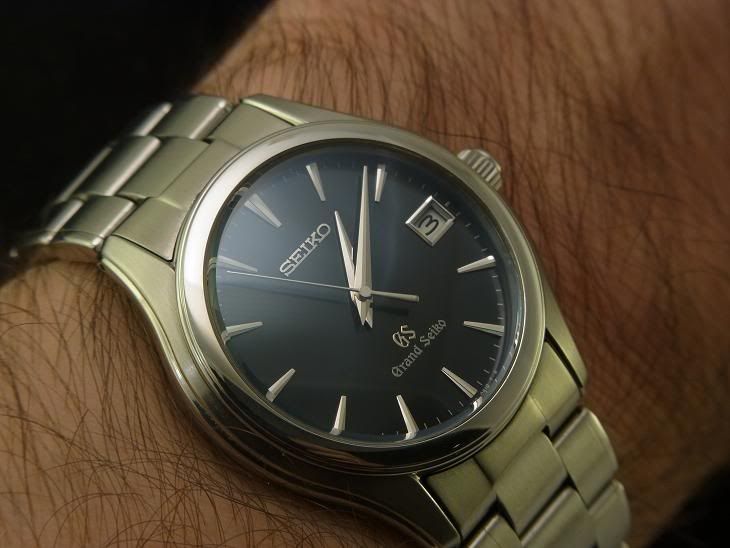
# 13, Grand Seiko 9F62- OA10 from 2003.
Joined the crowd in late August.


Gained 9.5 seconds in 4 month, quite dissapointed.


#14, Seiko Quartz Chronograph sports 100 , 7A28 from 1983, rated to +-15 s/month.
Very little used one.


Stupidly I forgot to replace battery in this one and it stopped, ran well before


# 15, Seiko 1/100 Chronograph, 7T52-6A30 from 1992 , rated to 15 s/month
Fun watch, well used.


+ 1 minute and 12 seconds is fine.

To me this result means that ageing is clear but in surprisingly many cases these old quartz
watches perform very well.
The good thing is also that the older high end quartzes can be adjusted to former glory if wanted.

I will now change the batteries and start it all over again.
But with an few more.

One of these must join I think.


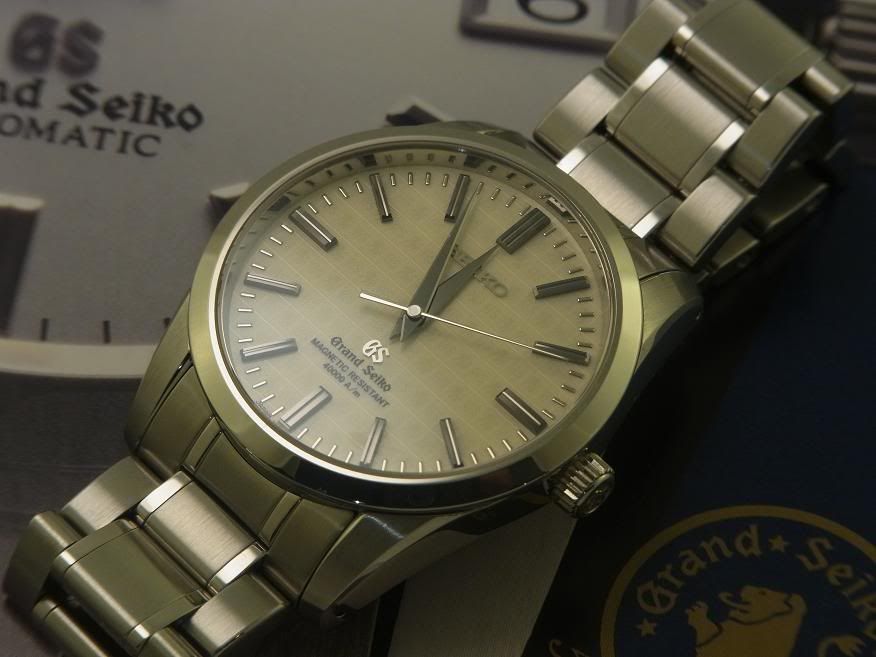
Also as I was a little bit disappointed of the performance of the 9F, I did what every normal WIS
Would do, I got one more ;-)

This have been to Seiko for service recently so I hope they also adjusted it.
Looks rather plain.


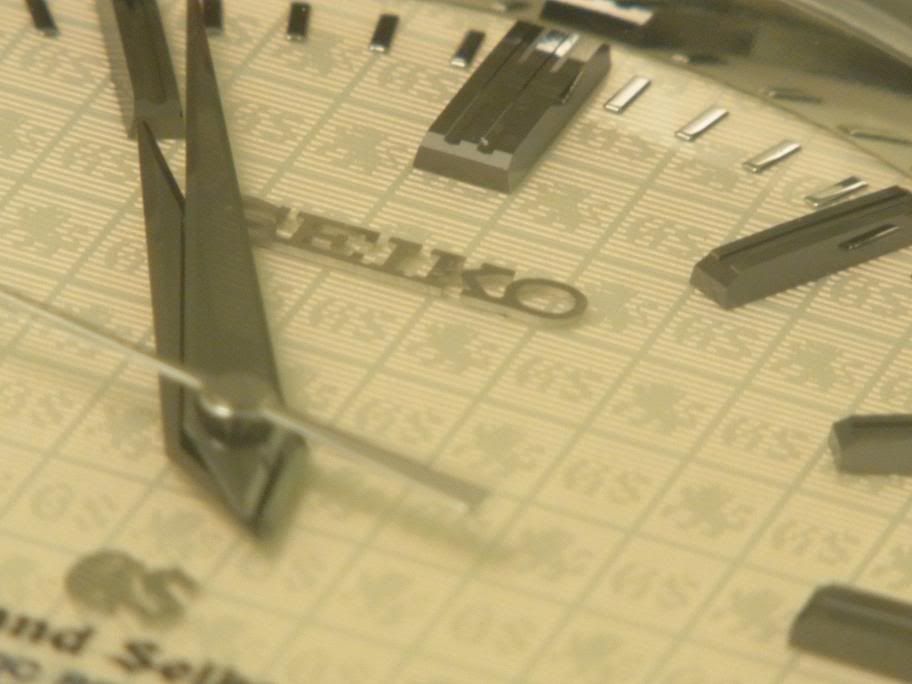
It have a lot of small lions so I hope for the best.


/Bjorn.
 

·
Registered
Joined
·
659 Posts
Very cool accuracy test, Bjorn. Nice to see these old Seikos still keeping decent time. Thanks for sharing!
 

·
Registered
Joined
·
242 Posts
Very interesting test. Thanks for posting the update.
I also hope things are getting back to normal for you after the big earthquake and tsunami.

andy b.
 
1 - 19 of 19 Posts
Top